What we gave up when creativity became effortless
Creativity didn’t lose its edge because talent declined or taste changed. It softened when effort disappeared, when making became effortless. And when effort goes, thinking becomes optional. This quiet shift has changed more than we often admit.
For much of the second half of the 20th century, creativity was shaped by constraint. Limited tools, tighter budgets, and real-time pressure meant ideas had to prove themselves before they were ever made. You had to commit early. You had to decide what matters. Effort acted as a filter, killing weak ideas before they reached execution and giving strong ones the time and resistance they needed to sharpen.
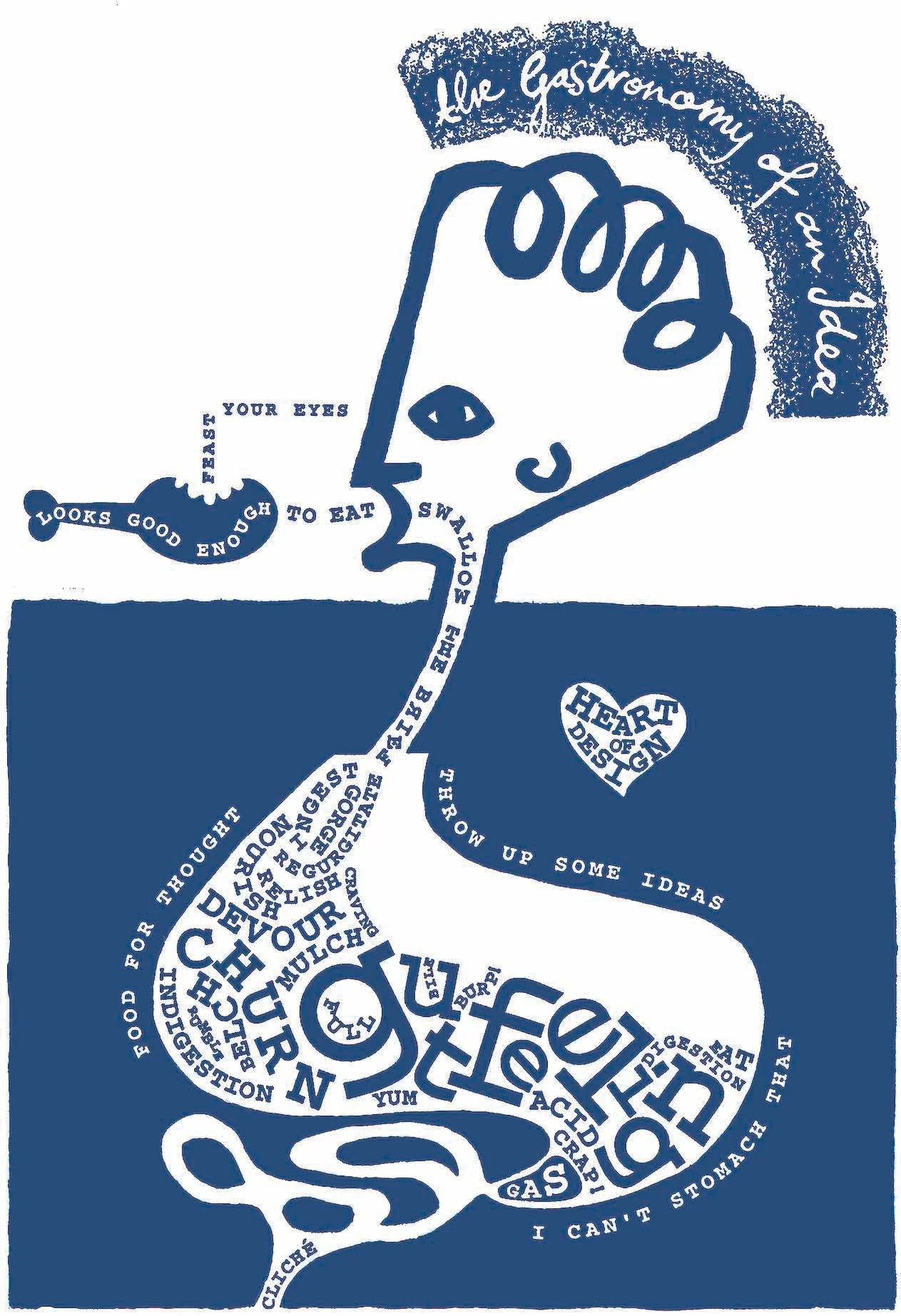
A visual from our own archives. Designed by our former agency, Cicchianni Malone, and distributed to clients in the ’90s, this poster mapped the creative process we lived by, pauses and all. Designers: Janine Ord, Nigel Malone & Marco Cicchianni
Today, friction is optional. Our tools are designed for speed, not certainty. They favour motion over resolution, progress over commitment. When change is always possible, decisions don’t hold as much weight. Thinking becomes something that happens along the way, not before.
The real shift isn’t just in speed, but in where decisions happen. We explore before we resolve. We make before we decide. The work keeps moving, but judgment gets deferred.
And that’s where “good enough” begins to thrive. Not because standards have dropped, but because conviction has. When everything can be tweaked later, ideas don’t need to be fully owned in the moment. They just need to make it to the next round.
This isn’t a mindset shift, it’s a structural one. Our culture of speed and abundance rewards momentum and optionality, not resolution and clarity. It makes thinking feel like a slowdown instead of progress. Strategy becomes something we retrofit, not something that sets direction.
Many creatives who came of age in the 20th century still carry process memory and muscle memory shaped by constraint. They pause instinctively. Not out of nostalgia, but strategy. Pausing asks why before opening the tool. It reduces the problem before expanding the output.
That’s valuable in today’s agency work. It doesn’t mean working slowly; it means knowing when to slow down. It reintroduces intentional constraint when everything feels possible. It protects clarity when timelines compress. It helps decisions feel deliberate, even inside fast-moving teams. And it reminds us that creativity begins with thinking, not software.
This isn’t an argument against technology. It’s a reminder that tools should amplify intent, not replace it. The real question isn’t whether we’re making more than ever. It’s whether we’re giving ourselves enough reason to stop and ask why before we decide how.
If this made you pause, good. That’s where creativity begins. Now ask, where has effort quietly disappeared from your own process?
Aryani Singh & Marco Cicchianni, January 2026