Football isn’t the point
We've been thinking a lot about sports clubs lately. A recent tender with a professional club sent us deep into research mode, studying how the most successful teams across codes and countries have built their brands. What they stand for. Where the fans actually live. What keeps people showing up long after the result is forgotten?
One club kept coming up. Not for their league position, for something harder to copy.
Como FC play in the Italian Serie A. They're on the shores of Lake Como, one of the most beautiful places on earth and already an established magnet for nearly a million tourists a year. Their Indonesian owners bought the club less than a decade ago. What they built since is one of the more interesting brand stories in world sport.
The move that defined their direction came early: they decided to treat the football club as an entry point, not the destination. It's a framework borrowed explicitly from Disney, where the match-day experience is the theme park, and everything else (fashion, retail, licensing, tourism, content) is the expanded universe around it. The football is real and taken seriously. Césc Fàbregas was brought in precisely because his attacking, high-energy style produces something worth watching and, more importantly, something worth sharing. But the pitch is only one chapter.
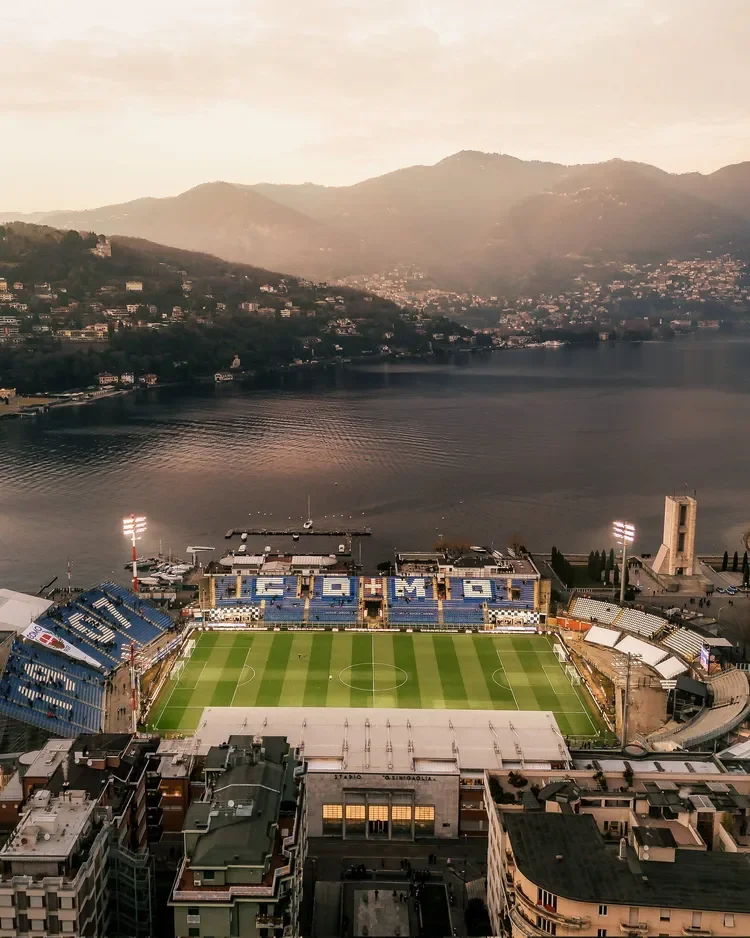
Stadio Giuseppe Sinigaglia, Como
What makes Como worth studying is the discipline with which they've committed to their place. Lake Como already carries an identity: Roman history, extraordinary natural beauty, a long association with wealth and a certain kind of style. Rather than importing a brand personality, Como leaned into what was already there. The Sinigalia Stadium sits right on the water. Celebrities don't attend as a stunt. They keep coming back because the venue makes them visible and intimate in a way a 90,000-seat bowl never could. That proximity became part of the product.
The tourism gap was a creative brief waiting to happen. Tourists arrive in summer. The team plays in winter. So they invented a tournament to bridge it.
That's the instinct we keep returning to in our own work: the best brands don't fight their context. They read it, then build from it.
The throughline at Como isn't football. It's place, culture, and the kind of life people aspire to live. Football just happens to be where you first encounter it.
Marco Cicchianni, April 2026