Uninhibited graphic design: what a 10-year-old can teach us
Ina is 10. She made up a project: make something for her mum. So she chose her colour pencil, and meant every bit of it. No second-guessing. Formed a refreshing and unexpected typography mark, and an edge cut to complement it, completely present in the making, and it shows.
Humans have been making things for a long time. And when I saw Ina's card, it stopped me in my tracks. Not because it was charming or naive, but because it had something that becomes genuinely hard to hold onto the longer you do this work. The joy of the creative process, uninterrupted. The mark of someone who answered from the heart and never once got in their own way.
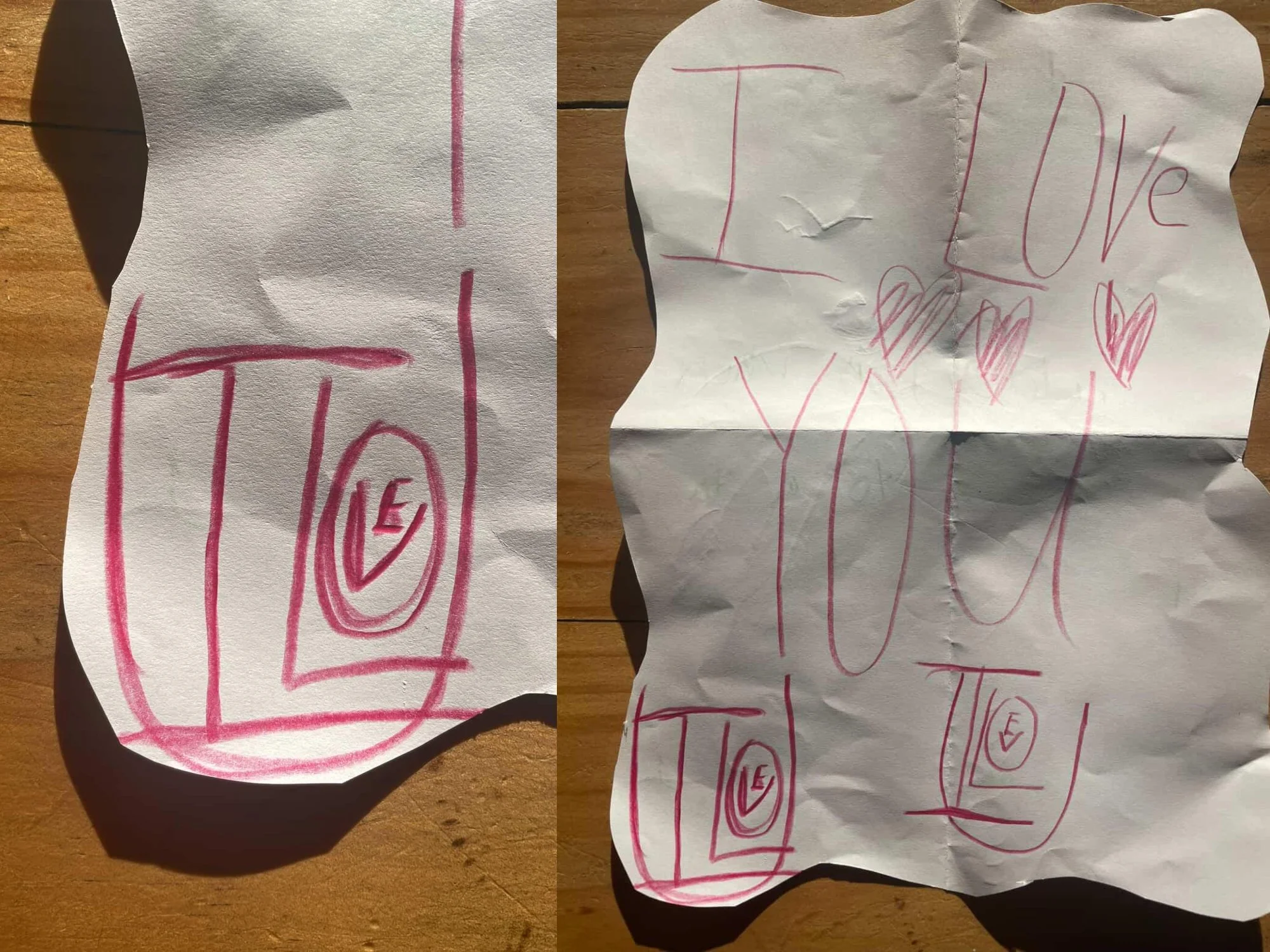
Ina’s I Love You handmade note
Because that's what happens to graphic designers. Slowly, quietly, without really noticing. We learn the rules, and there are good reasons to learn them. We get better, faster, and more capable. But somewhere in all of that becoming competent, the process stops being joyful and starts being careful. The inner critic arrives, dressed up as professional judgement, until making something feels less like discovery and more like risk management.
We lose our creative instinct without realising it. We stop being present in the work. We get ahead of ourselves: managing outcomes and anticipating approval before anything true has had a chance to emerge.
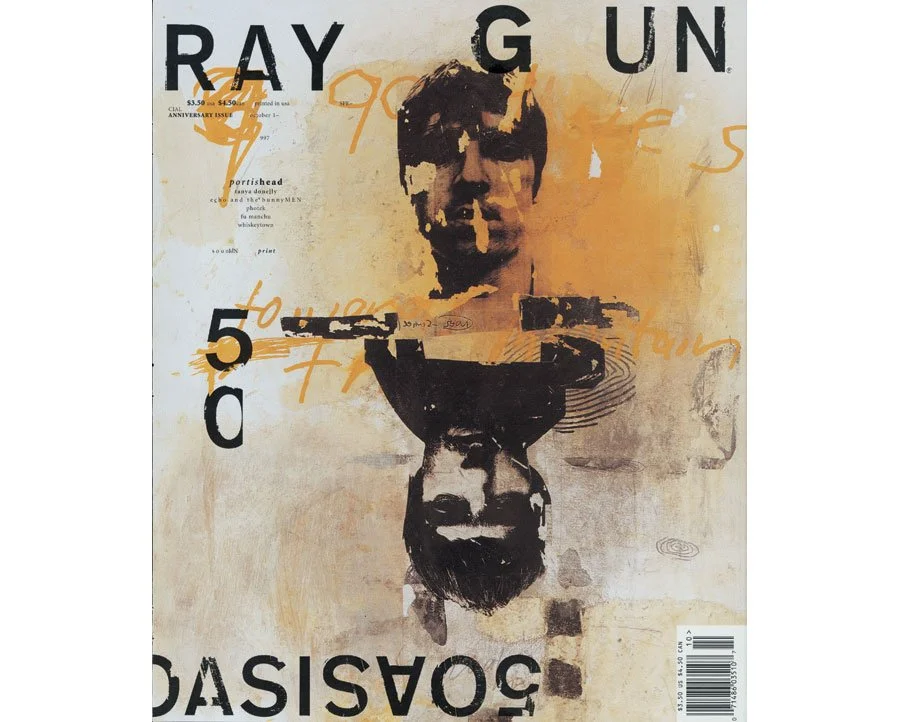
Ray Gun magazine cover by David Carson
David Carson understood what was at stake. Like Ina, he came to graphic design without formal training, no conventions installed, no rules deep enough to get between him and the instinct. Unconcerned with expectations, he spent the 1990s making experimental graphic design that felt alive because the process was alive. His layouts for Ray Gun were evidence of someone completely present in the making. Joyful, even. You can feel it. He put it simply: don't mistake legibility for communication.
The most interesting uninhibited design being made today carries the same quality. Not always from the biggest accounts or most awarded studios, but in zine fairs, Riso graph print runs, and peer communities. Younger designers who've kept the joy intact, unbothered by metrics, make work for the sake of making work.
Ina never lost it. She had something to say, she said it, and her mum felt it.
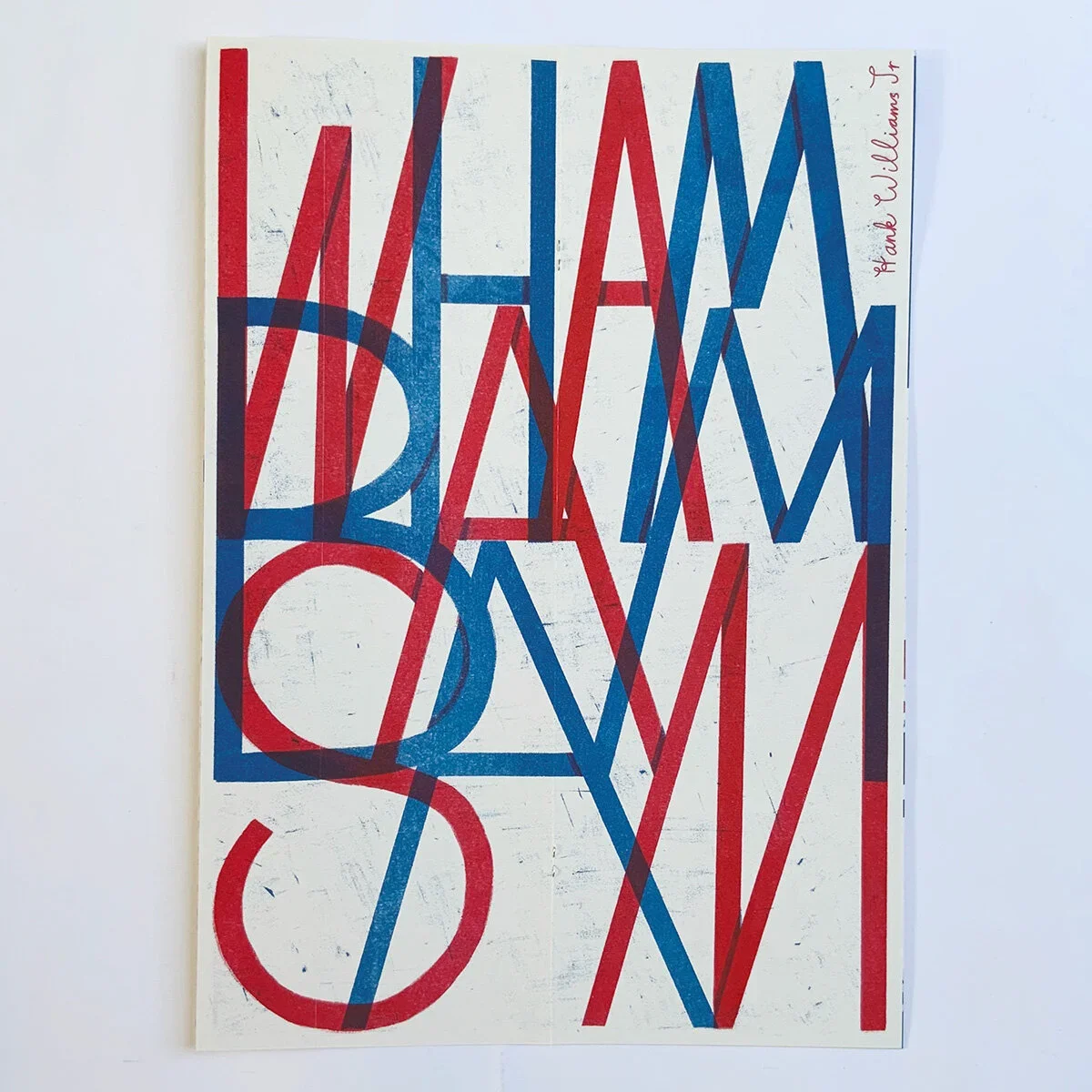
Risograph print by David Bain
Marco Cicchianni, March 2026